Diaspora Bonds in Nepal: Why the Timing May Not Be Right
Diaspora bonds have been promoted internationally as an innovative instrument for mobilizing capital from citizens living abroad to finance national development.
-
by Unitedforum

Share on:
Diaspora Bonds in Nepal: Why the Timing May Not Be Right
Diaspora bonds have been promoted internationally as an innovative instrument for mobilizing capital from citizens living abroad to finance national development. In theory, they allow governments to leverage the emotional attachment of overseas communities to support infrastructure, energy, education, healthcare, and other long-term development priorities. Given Nepal's large migrant population and significant remittance inflows, diaspora bonds are often presented as an attractive alternative source of financing.
However, international evidence and Nepal's current institutional realities suggest that diaspora bonds are unlikely to succeed under present conditions. Their effectiveness depends on strong governance, transparent institutions, macroeconomic stability, policy credibility, and sustained investor confidence—conditions that remain significant challenges in Nepal. Rather than becoming a transformative financing tool, diaspora bonds risk attracting only limited participation while creating reputational and financial risks for both investors and the government.
Patriotism Alone Cannot Drive Investment
Diaspora bonds are frequently based on the assumption that overseas citizens will accept lower financial returns because of their emotional attachment to their homeland. While patriotism may influence some investment decisions, it is rarely sufficient to sustain a successful bond programme.
Most members of the Nepali diaspora are rational investors. They compare investment opportunities across countries by considering returns, risk, liquidity, currency stability, legal protection, and institutional credibility. Emotional ties cannot compensate for uncertainty regarding governance, economic management, or the security of investments. Without strong financial and legal safeguards, many overseas Nepalis are likely to prefer established investment markets in their countries of residence.
Weak Governance Reduces Investor Confidence
Trust is the foundation of every successful diaspora bond programme. Investors need confidence that governments will manage funds responsibly, allocate resources transparently, and deliver promised development outcomes.
Nepal continues to face governance challenges, including bureaucratic inefficiency, policy inconsistency, weak project implementation, and concerns about transparency and accountability. These issues can discourage long-term investment from overseas Nepalis, many of whom expect internationally accepted standards of financial management.
Without independent monitoring, regular public reporting, and strong institutional oversight, diaspora bonds may struggle to gain the credibility required to attract substantial investment.
Unresolved NRN Policy Issues
One of the greatest barriers to diaspora investment is the absence of a clear long-term policy framework governing the relationship between Nepal and its global diaspora.
Many Non-Resident Nepalis continue to seek greater clarity regarding their legal status, investment rights, taxation, property ownership, inheritance arrangements, financial regulations, and broader participation in Nepal's economic development. Debate over issues such as dual citizenship and the rights of overseas Nepalis has continued for years, creating uncertainty that may discourage long-term financial commitments.
When investors remain uncertain about their legal rights and future relationship with the state, they are less likely to commit capital through long-term government securities.
Macroeconomic and Currency Risks
Diaspora bond investors also evaluate macroeconomic conditions before making investment decisions.
Inflation, exchange-rate risk, fiscal sustainability, and the country's overall economic outlook influence expected returns. If a bond is denominated in Nepali rupees, currency depreciation may reduce returns for overseas investors. If issued in foreign currency, the government assumes greater foreign exchange liabilities.
Unless these risks are carefully managed, diaspora bonds may become expensive for the government while remaining unattractive to investors.
Limited International Success
Global experience demonstrates that successful diaspora bond programmes are the exception rather than the rule.
Israel has sustained a successful programme for decades because of strong institutional capacity, continuous engagement with its diaspora, and high levels of investor trust. India has successfully issued diaspora bonds during periods of financial stress, supported by credible financial institutions and a large base of relatively affluent overseas investors.
In contrast, several countries—including Ethiopia, Greece, Kenya, Nigeria, Pakistan, Sri Lanka, and others—have experienced limited participation, undersubscribed bond offerings, or discontinued initiatives. These examples illustrate that diaspora bonds are not easily transferable from one country to another. Institutional quality, governance, and investor confidence are more important than the size of the diaspora alone.
High Administrative Costs and Limited Returns
Designing and managing a diaspora bond programme requires significant administrative capacity. Governments must establish legal frameworks, conduct international marketing campaigns, comply with financial regulations across multiple jurisdictions, appoint financial intermediaries, manage investor relations, and maintain continuous communication with overseas communities.
For Nepal, these costs may outweigh the benefits if investor participation remains modest. A poorly subscribed bond programme could damage the government's credibility and reduce confidence in future fundraising initiatives.
Alternative Priorities for Nepal
Instead of introducing diaspora bonds prematurely, Nepal should first focus on creating an enabling environment for diaspora investment.
Priority reforms include strengthening governance, improving public financial management, reducing bureaucratic barriers, enhancing the rule of law, ensuring policy consistency, providing greater legal certainty for Non-Resident Nepalis, and increasing transparency in public investment projects.
The government should also encourage productive private investment from the diaspora through easier business registration, investment facilitation, digital financial services, infrastructure partnerships, and targeted investment incentives. These reforms are likely to generate greater long-term economic benefits than launching a diaspora bond programme before the necessary institutional foundations are in place.
Diaspora bonds have attracted considerable attention as an innovative source of development finance, but they should not be viewed as a practical solution for Nepal under current conditions. Their success depends on investor trust, institutional credibility, transparent governance, sound macroeconomic management, and a stable legal environment.
Nepal currently faces significant challenges in many of these areas. Persistent uncertainty regarding the rights of Non-Resident Nepalis, unresolved policy debates surrounding dual citizenship, concerns over taxation and investment protection, inconsistent policy implementation, and governance weaknesses continue to undermine investor confidence.
Without first addressing these structural issues, diaspora bonds are unlikely to attract broad participation from overseas Nepalis. Rather than serving as a major source of development finance, they may generate limited investment while exposing the government to reputational and financial risks. Nepal should therefore prioritize institutional reform and strengthening its relationship with the global Nepali diaspora before considering diaspora bonds as a viable financing instrument. Only after these foundations are firmly established can such a programme have a realistic chance of success.
- Dr. Krishna Pandey, PhD (CSR), CFP, MBA, President, UEF, Switzerland
References
Brookings Institution. (2022). Diaspora Bonds: An Innovative Source of Financing?
Ketkar, S. L., & Ratha, D. (2007). Development Finance via Diaspora Bonds: Track Record and Potential (World Bank Policy Research Working Paper No. 4311). World Bank.
Ketkar, S. L., & Ratha, D. (2010). Diaspora Bonds: Tapping the Diaspora during Difficult Times. Journal of International Commerce, Economics and Policy, 1(2), 251–263.
Migration Policy Institute. (2021). Can Diaspora Bonds Supercharge Development Investment?
Perez-Armendariz, C., & Burgess, K. (2013). Diaspora Bonds: Explaining Their Mixed Record. SSRN Working Paper.
Related post




Most read
Latest world's most important and pressing issues
more
Comprehensive
Why Long-Term Investors Should Look Beyond Dubai: The Case for Canada, Europe, India, and Nepal
Jul, 04, 2026
Unitedforum
Comprehensive
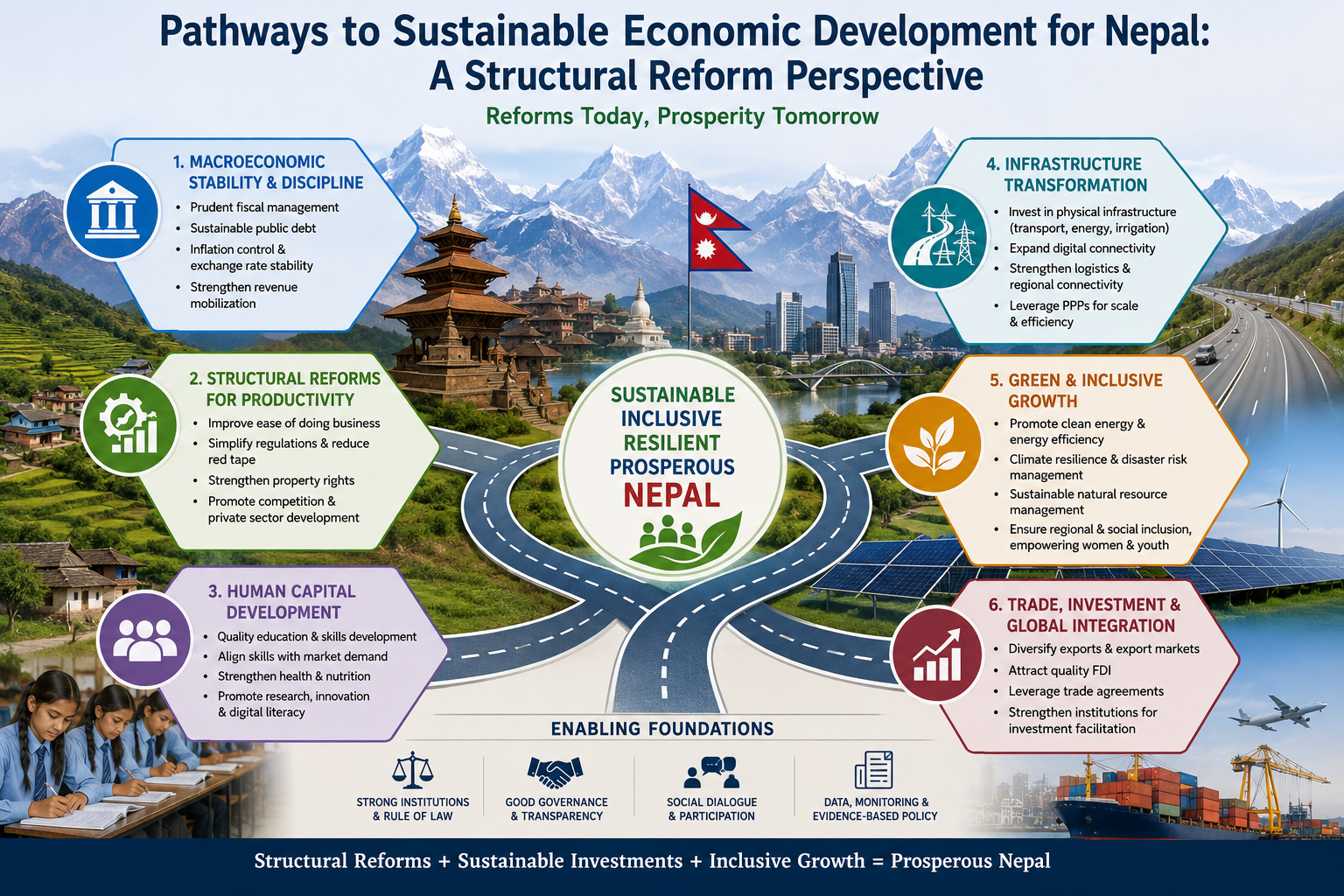
Pathways to Sustainable Economic Development for Nepal: A Structural Reform Perspective
Jun, 15, 2026
Unitedforum

Upcoming events
Diaspora Bonds in Nepal: Why the Timing May Not Be Right
Past events

EVENT
IMEX Frankfurt 2026
IMEX Frankfurt 2026: IMEX Frankfurt is the premier annual gathering for the global meetings, events, and incentive trave...

EVENT
HR Tech Europe - HR Executive Event
HR Tech Europe is the region’s leading event dedicated to HR innovation and technology, bringing together senior HR lead...

EVENT
World Ocean Summit & Expo
World Ocean Summit & Expo 2026, organized by Economist Impact, will take place from Wednesday, March 4 to Thursday, Marc...

EVENT
Korea MICE Expo 2025
KOREA MICE EXPO (KME) is South Korea’s flagship event for the Meetings, Incentives, Conferences, and Exhibitions (MICE)...

EVENT
Franchise-Meet Europe- 2025
Franchise-Meet Europe 2025 is set to take place from July 12 to 14, 2025, at the FYCMA - Trade Fairs and Congress Center...

EVENT
IMEX Frankfurt 2025
IMEX Frankfurt 2025 is set to take place from May 20–22, 2025, at Messe Frankfurt, Germany. As one of the premier global...

EVENT
Global Youth Leadership Summit & Awards 2025
The Global Youth Leadership Summit & Awards 2024 is set to take place on 21-22 April, 2025, in the vibrant city of Malag...

EVENT
Agricultural Excellence Conference (AgEx 2024)
AgEx 2024, held November 19-21 in Abbotsford, BC, is Canada’s only national event dedicated to farm management and safet...


EVENT
Korea MICE Expo (KME) 2024
The Korea MICE Expo (KME) 2024 will be held from November 6-8 at Songdo ConvensiA in Incheon, South Korea. As the countr...

EVENT
IMEX AMERICA
IMEX America 2024 is set to be one of the largest gatherings for the global meetings, incentives, conferences, and event...
